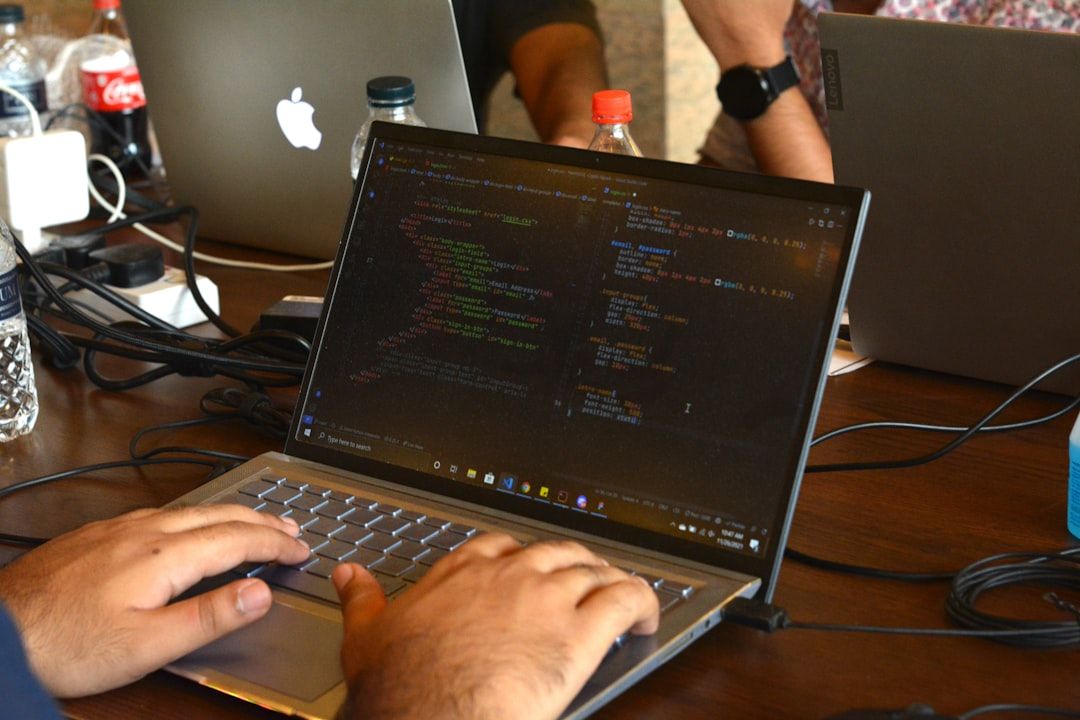
The old "no-code vs low-code" debate was already blurred by 2024. In 2026 it's four distinct lanes, each solving a different problem. Webflow and Bubble are still visual no-code builders. Retool and Appsmith own low-code internal tools. Lovable, v0, Figma Make, and Anthropic's Claude Design (launched April 17, 2026) occupy the AI prompt-to-app lane. Cursor, Windsurf (now part of Cognition), and Claude Code are the AI-in-IDE lane for designers who edit actual codebases. Collapsing these into a single "no-code vs low-code" framing misses the only question that actually matters: which lane fits the specific work you're trying to ship?
This post is the 2026 taxonomy, the correct tool status for each player (Galileo is now Google Stitch, Manus was acquired by Meta, Figma Make launched at Config in May 2025 not 2024), and an honest decision matrix for designers. Plus the failure modes — the Cursor pricing blowup, the Lovable VibeScamming vulnerability, the METR finding that senior developers were 19% slower using AI tools despite feeling 20% faster — because "AI-accelerated" isn't the same as "always better."
TL;DR — Key Takeaways
The old "no-code vs low-code" debate was already blurred by 2024.
- Four lanes, not three. Visual no-code (Webflow, Bubble, Adalo, Framer) vs low-code internal tools (Retool, Appsmith, Superblocks, Budibase) vs AI prompt-to-app (Lovable, v0, Bolt.new, Replit Agent, Figma Make, Claude Design) vs AI-in-IDE (Cursor, Windsurf, Claude Code, Copilot).
- Claude Design (April 17, 2026) is the most recent inflection point. Anthropic Labs research preview, powered by Claude Opus 4.7. Reads codebases and design files, exports to Figma/Canva/PPTX/PDF, hands off to Claude Code. Available on Pro, Max, Team, Enterprise.
- Figma Make launched May 7, 2025 at Config 2025 (not 2024). Now generally available. Figma Make on mobile rolled out in April 2026.
- Windsurf is now Cognition. Google paid $2.4B to license IP and hire leadership in July 2025. Cognition acquired the remaining IP (~$82M ARR, 350+ enterprise customers) and is valued at $10.2B as of September 2025.
- Galileo AI became Google Stitch in May 2025, now Gemini-powered and part of Google Labs.
- Lovable raised $330M Series B at a $6.6B valuation in December 2025, reaching $200M ARR.
- METR's November 2024 RCT found senior developers were 19% slower with AI tools despite reporting they felt 20% faster. AI-accelerated ≠ always faster.
- Cursor's June 2025 pricing blowup (credit-based pricing flip, reversed after Michael Truell's July 4, 2025 apology) is the cautionary tale for AI-tool dependency.
The Four Lanes
Each lane solves a different problem. They're not interchangeable. Choosing the wrong lane is the most common cause of wasted weeks on the wrong tool.
Lane 1: Visual No-Code Builders
What it is: Drag-and-drop interfaces that produce production websites or apps, with data models and logic configured visually.
Representative tools: Webflow, Bubble, Framer, Adalo.
Who it's for: Designers and founders building marketing sites, simple web apps, landing pages, and prototypes intended for production without a full engineering team. Designers who want pixel-level control without writing code.
Strengths: Production hosting built in. Robust CMS integrations (Webflow especially). Visual fidelity that matches designer expectations. No deployment complexity.
Weaknesses: Escape hatch is expensive — migrating a Webflow or Bubble app to custom code is effectively a rebuild. Vendor lock-in is real. Complex logic or integrations hit walls where no-code can't go and custom code becomes necessary anyway.
2026 status: Webflow remains dominant for marketing sites. Bubble for full web apps. Framer surging for designer-marketing-site crossover. Adalo appears to be repositioning per its March 2026 "Adalo's Next Chapter" post, with a smaller team than major competitors — watch before committing long-term.
Lane 2: Low-Code Internal Tools
What it is: Frameworks for building internal-facing business applications (dashboards, admin panels, data tools) by connecting to databases and APIs with minimal custom code.
Representative tools: Retool, Appsmith, Superblocks, Budibase.
Who it's for: Engineering and ops teams building internal tools that don't need pixel-perfect design. Typically engineers or technical PMs, not designers primarily — though designers often consult on these tools.
Strengths: Massive time savings for CRUD dashboards and admin UIs. Database integration first-class. Role-based access control built in.
Weaknesses: Not for customer-facing products. Visual design is typically basic (not necessarily bad, but not polished). Escape hatch still requires rebuilding in custom code if you outgrow the platform.
2026 status: Retool is the clear market leader. Appsmith and Budibase are strong open-source alternatives. For designers, this lane is mostly relevant when consulting with internal-tool teams — not as a primary output channel.
Lane 3: AI Prompt-to-App Builders
What it is: AI-powered tools that take natural language prompts (and sometimes design files) and generate working code or visual mockups. Output is typically either working web apps or Figma-compatible designs.
Representative tools: Lovable, v0 by Vercel, Bolt.new, Replit Agent, Figma Make, Claude Design (Anthropic, April 2026), Google Stitch (formerly Galileo AI), Manus (now at Meta).
Who it's for: Designers who want to rapidly go from concept to interactive prototype without building hand-coded Figma mockups or wiring components manually. Startup founders who want a working v1 quickly. PMs who want to show concepts before committing engineering hours.
Strengths: Speed. Going from prompt to working prototype in minutes, not days. Iteration loops are much tighter than in traditional Figma or code workflows. Output quality has improved dramatically in 2025-2026.
Weaknesses: Output often requires significant cleanup for production use. Generated code can be inconsistent with your design system. Security and performance considerations often get skipped. Opinionated aesthetic defaults that don't always match your brand. Rate limits and pricing volatility.
2026 status: This is the most volatile lane in the industry. Major 2025-2026 developments:
- Claude Design launched April 17, 2026 as an Anthropic Labs research preview. Powered by Claude Opus 4.7. Reads codebases alongside design files, exports to Figma/Canva/PPTX/PDF, hands off to Claude Code for engineering. Available to Pro, Max, Team, and Enterprise subscribers. Known bugs in the preview: comment persistence issues, save errors in compact view, performance lag on large codebases. On launch day, Figma stock reportedly dropped ~7% and Adobe ~4%. Full coverage: Anthropic announcement and related post.
- Figma Make launched at Config 2025 on May 7, 2025 (not 2024 as sometimes reported), and is now generally available. Figma Make on mobile rolled out April 2026.
- Lovable reached $200M ARR and raised $330M Series B at a $6.6B valuation in December 2025. Pricing: Free tier, Starter $20/mo, Pro $25/mo, Business ~$50/mo, Enterprise custom. In April 2026 Lovable began integrating Opus 4.7 with promotional 2x credits in apparent response to Claude Design.
- Bolt.new added 2-month token rollover effective July 1, 2025.
- Galileo AI → Google Stitch (May 2025). Now Gemini-powered, part of Google Labs.
- Manus was acquired by Meta in December 2025 for approximately $2-3B. Singapore-based, still operates independently. Chinese regulatory review is ongoing per reporting.
- Replit Agent continues as part of Replit's platform, with Replit itself pivoting harder toward AI.
Lane 4: AI-in-IDE Coding Assistants
What it is: AI-powered coding tools that live inside an integrated development environment, letting designers (or engineers) edit real codebases with AI assistance.
Representative tools: Cursor, Windsurf (now part of Cognition), Claude Code, GitHub Copilot Workspace, Devin (Cognition).
Who it's for: Designers who work in real codebases (design engineers, designers at AI-native companies like Perplexity and Anthropic where designers ship PRs). Anyone using AI to accelerate actual code editing, not just prototype generation.
Strengths: Operates on your real codebase with your real patterns. Output integrates directly into your existing stack. Can handle complex logic, not just UI. Strongest workflow for production-grade work.
Weaknesses: Requires comfort reading code. Learning curve steeper than prompt-to-app tools. Pricing volatility (see Cursor case below).
2026 status:
- Cursor had a major pricing blowup June 16 - July 4, 2025 when it shifted to credit-based pricing in a way that surprised users. Founder Michael Truell apologized and issued refunds on July 4. Current Pro plan is $20/month plus $20 credit pool, billing completed in August 2025 for teams. Cursor 3 launched early 2026. Cursor hit $2B ARR in February 2026, with a reported $60B valuation option around SpaceX deal-adjacent activity in April 2026.
- Windsurf is the most complex status. OpenAI's July 2025 acquisition bid collapsed. Google paid $2.4B to license Windsurf's IP and hire the CEO and leadership. Cognition acquired the remaining IP (~$82M ARR, 350+ enterprise customers) and is now valued at $10.2B as of September 2025. Windsurf is now integrated with Cognition's Devin. Anthropic restored Claude access post-Cognition acquisition.
- Claude Code (Anthropic) continues as the agentic coding CLI tool, integrating with the broader Claude ecosystem and handing off from Claude Design.
The Decision Matrix
Given the four lanes, here's when to reach for each — as a designer in 2026.
You need a marketing site or portfolio: Lane 1 (Webflow, Framer). Don't overthink it. Visual no-code wins for this.
You need a simple internal dashboard or admin tool: Lane 2 (Retool, Appsmith). Partner with engineering rather than building yourself unless you're comfortable with light JavaScript.
You need to prototype a product concept fast, from scratch: Lane 3 (Claude Design, Figma Make, Lovable, v0). AI prompt-to-app generates first drafts in minutes. Iterate from there.
You need to extend your Figma designs into interactive code: Lane 3 (Figma Make, Claude Design). Both specifically bridge designer workflows to working prototypes.
You need to edit or extend an existing codebase: Lane 4 (Cursor, Claude Code). Prompt-to-app tools can't cleanly merge into existing code; IDE-based AI tools are built for this.
You need to build a customer-facing production SaaS v1: Depends. Lane 3 for rapid MVP validation. Lane 4 (plus engineer collaboration) for what ships to real customers.
You need to prototype and then hand off to engineers: Lane 3 with Figma export (Figma Make, Claude Design). The handoff quality matters — generated code that your engineers can't use is worse than a static mockup.
You need pixel-perfect brand-driven marketing: Lane 1 (Webflow or Framer) or Lane 3 (Claude Design with explicit brand prompting), depending on complexity. Lane 4 works too if you're comfortable in the IDE.
Honest Failure Modes
AI tools are often marketed as pure wins. The research and practice tells a more nuanced story.
The METR senior-developer finding
METR's November 2024 randomized controlled trial studied 16 senior developers working on real open-source repositories they maintained. Developers estimated AI tools would speed them up by 24%. After the trial, they reported feeling 20% faster. But the actual measured outcome: senior developers were 19% slower with AI tools than without.
Important caveats: this was senior developers on codebases they already knew well. Junior developers showed gains (typically +26% in similar studies). Designers using AI for greenfield prototyping are closer to the junior-developer scenario than the senior-developer scenario.
The implication is not "don't use AI." It's "measure your actual output, not your perceived speed." The belief that AI made you faster is not evidence that it did.
The Cursor pricing blowup
Between June 16 and July 4, 2025, Cursor's shift to credit-based pricing produced widespread user backlash. Teams reported unexpected bills of $350+/day from what they thought was unlimited Pro usage. Michael Truell apologized on July 4, issued refunds, and restructured pricing. The lesson is platform risk: depending on an AI tool means depending on its pricing model, which can change.
Lovable VibeScamming (April 2025)
Guardio Labs published an analysis in April 2025 showing that Lovable-generated apps were being used by scammers to rapidly produce phishing sites and social-engineering infrastructure. The vulnerability was that Lovable's defaults didn't catch obvious abuse patterns and made it trivially easy to spin up lookalike login pages. The practical implication for designers: AI-generated apps may skip security considerations (input validation, auth, rate-limiting) that production requires. Cleanup is on you.
Output inconsistency with your design system
Every prompt-to-app tool has opinionated aesthetic defaults. Left unchecked, the output looks generically "AI-generated" — similar gradients, similar card shapes, similar font choices across different tools. Injecting your actual design system into prompts (CSS, component library conventions, brand colors) helps but doesn't fully fix the drift. Post-generation cleanup in Lane 4 tools is often required.
The rebuild tax
Code from Lane 3 prompt-to-app tools is typically suitable for prototypes and MVPs. Hardening for production (proper error handling, performance optimization, accessibility, security, test coverage) is often 3-5× the original generation time. Budget for rebuild, not copy-paste-to-ship.
How Designers at Top Companies Actually Use These Tools
From recent interviews, company blog posts, and the Dive Club 2026 AI Design Field Report (by Ridd), the actual usage patterns.
Perplexity. Typical product team sizes are 2-3 people, flat organizational structure. Designers prototype directly in code using Cursor and Claude Code. Design and engineering are less separated than in traditional product orgs.
Anthropic (Claude itself). Head of Design Jenny Wen has publicly argued the classic design process is dead (Lenny's Newsletter, March 1, 2026). Design at Claude is heavily AI-integrated, with designers using Claude Design, Claude Code, and Cursor in daily workflow.
Cash App. Per Cameron Worboys, >90% of designers ship PRs directly to production codebases, heavily AI-assisted.
Datadog and Brilliant. Both cited in the Claude Design launch as early-access customers. Reported quote: "20+ prompts in other tools now take 2 in Claude Design" for certain workflows. Verify the claim in context; the productivity shift is directionally consistent with other AI-native workflows.
Ridd / Dive Club. The 2026 AI Design Field Report synthesizes data from hundreds of designers. Key finding: AI tool usage is now a performance-review consideration at many companies, meaning refusing to adopt is a career risk.
Solo builders on the extreme end. Pieter Levels runs a portfolio of AI-native products ($3-3.5M ARR combined; PhotoAI alone ~$135K MRR as of November 2025). Marc Lou shipped $1M+ in 2025 as a solo founder. These aren't reproducible playbooks for most designers but they're the ceiling of what's possible.
Practical Recommendations
What to actually do, if you're a designer in 2026 trying to figure out which lane to invest in.
Adopt at least one tool from Lane 3. Claude Design, Figma Make, Lovable, or v0. The prompt-to-app lane is where design skills most clearly extend into interactive prototypes. Showing competence here differentiates in hiring.
Get functional in Lane 4 if you work on real products. Not necessarily Cursor or Claude Code specifically, but the ability to read and make small edits in a codebase. The designers at Cash App, Perplexity, and Anthropic who are shipping PRs are not writing complex backend code; they're making UI-layer edits with AI assistance.
Don't rebuild your portfolio site in no-code just to try it. Lane 1 tools are fine but the ROI on switching if you already have a working portfolio is low. Pick one lane to invest in deeply.
Beware tool volatility. The AI tool landscape changes monthly. Claude Design was 7 days old when this post was written. Windsurf was acquired twice. Galileo renamed to Stitch. Manus moved to Meta. Betting everything on one AI vendor's roadmap is risky; maintain fluency in 2-3 tools.
Measure your actual output, not perceived speed. The METR finding should humble everyone. Perceived speed is not measured speed. Ship artifacts. Count them. Compare to baseline.
Budget rebuild time for production work. Lane 3 output is a starting point, not a destination, for anything customer-facing.
Frequently Asked Questions
What's the difference between no-code, low-code, and AI-code?
No-code (Webflow, Bubble, Adalo, Framer) is visual drag-and-drop for building marketing sites and simple apps. Low-code (Retool, Appsmith, Superblocks, Budibase) is for building internal business tools by connecting to databases with some light code. AI-code splits into two sub-lanes: AI prompt-to-app tools (Lovable, v0, Figma Make, Claude Design) that generate working apps from natural language and design files, and AI-in-IDE tools (Cursor, Claude Code, Windsurf) that assist editing real codebases. The four lanes solve different problems.
What is Claude Design?
Claude Design is Anthropic's AI design tool, launched April 17, 2026 as an Anthropic Labs research preview. It's powered by Claude Opus 4.7, reads codebases alongside design files, exports to Figma/Canva/PPTX/PDF, and hands off to Claude Code for engineering. Available to Pro, Max, Team, and Enterprise subscribers. It's currently a research preview with known bugs (comment persistence, save errors in compact view, performance on large codebases). See the full comparison post for how it compares to Figma Make, Lovable, and v0.
When did Figma Make launch?
Figma Make launched at Config 2025 on May 7, 2025. Not 2024 as sometimes reported. It's now generally available. Figma Make on mobile rolled out in April 2026.
What happened to Windsurf?
Windsurf had a complex acquisition path. OpenAI's acquisition attempt collapsed in July 2025. Google paid $2.4B to license Windsurf's IP and hire its CEO and leadership. Cognition acquired the remaining IP (approximately $82M ARR, 350+ enterprise customers) and is now valued at $10.2B as of September 2025. Windsurf is now integrated with Cognition's Devin. Anthropic restored Claude access to Windsurf post-Cognition acquisition.
What happened to Galileo AI?
Galileo AI was acquired by Google in May 2025 and rebranded as Google Stitch. It's now part of Google Labs and powered by Gemini rather than the original Galileo models.
Is Lovable actually faster than Cursor for building apps?
For initial generation from scratch, Lovable is typically faster — Lane 3 prompt-to-app tools optimize for going from nothing to working prototype in minutes. For editing existing codebases or hardening for production, Cursor and other Lane 4 tools are much more effective. The honest answer: they're for different tasks, and serious designers use both.
Should I learn to code as a designer in 2026?
Yes, to a functional level. "Functional" means comfortable reading HTML/CSS/JavaScript/React, able to make small edits to components, able to collaborate with AI coding tools to extend that capability. You don't need to be a production-grade software engineer, but designers who refuse to engage with code are increasingly limited in 2026 product orgs. Tools like Claude Code and Cursor dramatically lower the floor for what code fluency requires.
Do AI tools actually make me faster?
Sometimes. Per METR's November 2024 RCT, senior developers on codebases they knew well were actually 19% slower with AI tools — even though they reported feeling 20% faster. Junior developers and anyone working on greenfield projects typically gain. The honest discipline is to measure actual output (shipped artifacts, completed tasks) rather than perceived speed. AI tools help in many cases; the belief that they always help in every case is not supported by the data.
For the deep dive on Claude Design specifically, read [Claude Design vs Figma, Lovable, and v0](https://mantlr.com/blog/claude-design-vs-figma-lovable-v0).
For the workflow and mindset shift, see [The Vibe Coding Paradox](https://mantlr.com/blog/vibe-coding-paradox) and [Prompt Engineering for Designers](https://mantlr.com/blog/prompt-engineering-designers).
For what a 2-person design team actually looks like using this stack, read [What Happens When Your Design Team Is 2 People and an AI](https://mantlr.com/blog/2-person-design-team-ai).
Browse Mantlr's curated [AI design tools](https://mantlr.com/categories), [no-code resources](https://mantlr.com/categories), and [design engineering tools](https://mantlr.com/categories) to assemble your 2026 toolkit.
External references: